Lake Superior, the largest of the Great Lakes, experiences the highest waves, topping out at about 30 feet. Marine forecasters at the National Weather Service office in Romeoville say the highest waves on Lake Michigan are 20-23 feet in height..
Similarly, what is the largest wave ever recorded on Lake Michigan?
On Oct. 24, Lake Superior buoys north of Marquette, Mich., part of the Great Lakes Observing System, recorded waves of 28.8 feet, the highest ever recorded on the Great Lakes. The measurement is an average of the tallest third of the waves over a ten-minute period, which means some waves could have been even higher.
Subsequently, question is, does Lake Michigan get waves? WATCH LIVE AS WAVES BATTER MICHIGAN Nearly 2 million people are also under a lakeshore flood warning, mainly along the western Michigan coast. Waves will build Tuesday to between 10 and 16 feet, while reaching 21 feet in some locations.
Accordingly, how high can the waves get on the Great Lakes?
Waves up to 13-feet high and winds up to 40 mph are predicted for some spots.
Can you surf on Lake Michigan?
The sheer size of the Great Lakes is what makes surfing on them possible. While ocean waves are created by distant storm systems, waves on the Great Lakes are formed by localized winds. Thanks to ongoing improvements in wetsuit technology, surfers are now able to comfortably ride lake waves year-round.
Related Question Answers
What's the most dangerous Great Lake?
The Great Lakes are all dangerous, but Lake Michigan is the deadliest for one big reason. The dangerous secret behind Lake Michigan is the lake's configuration. It is 307 miles in length north to south, with uninterrupted shores on east and west sides. This exposes the shorelines to deadly longshore and rip currents.Is there sharks in Lake Michigan?
Bull sharks have been seen in Lake Michigan, but it is very rare.Could a tsunami happen in Lake Michigan?
Seiches: Sudden, Large Waves a Lake Michigan Danger. While a tsunami will never strike Illinois, the Lake Michigan coast, including Chicago, is subject to the danger presented by a seiche, a sudden, large type of wave that can cause loss of life and property damage.Which Great Lake has the worst storms?
Lake Huron
Where is the deepest point of Lake Michigan?
Lacey Mason of the Great Lakes Environmental Laboratory in Ann Arbor, Michigan informed us that the deepest part of Lake Michigan is about 925 feet, and is located in the Chippewa Basin which is about 36 miles east of Forestville, Wisconsin on the Door Peninsula.Can there be a tsunami in the Great Lakes?
Tsunamis in lakes can be generated by fault displacement beneath or around lake systems. Needs to occur just below the lake bottom. Earthquake is of high or moderate magnitude typically over magnitude four. Displaces a large enough volume of water to generate a tsunami.What is the biggest wave ever recorded?
An earthquake followed by a landslide in 1958 in Alaska's Lituya Bay generated a wave 100 feet high, the tallest tsunami ever documented.How big were the waves that sank the Edmund Fitzgerald?
About the FitzgeraldIt was 730 feet long, 75 feet wide, and 39 feet high.Did the Edmund Fitzgerald break in half?
By then, the doomed freighter had already plunged to the lake's bottom and had broken in two. When the U.S. Coast Guard surveyed the Edmund Fitzgerald's wreck site in 1976, it used a U.S. Navy submersible to get video of the ship's two halves on the lake bottom, covered in mud.Can a lake have a hurricane?
Yes, A 'Hurricane' Once Formed On The Great Lakes, And It Was An Epic Storm. Coastal states are always prepared for the possibility of tropical storms and hurricanes in the late summer and fall due to their proximity to the massive bodies of water they border.Can lakes have waves?
Lakes do have waves. In fact lake superior and other huge Lakes can be terrifying because of wave action. Constant wind from the same direction will cause waves just like they will in the ocean.How cold is Lake Superior right now?
Lake Eire's average surface water temperature is now 77 degrees, which is seven degrees warmer than the long-term average.Are there rogue waves on the Great Lakes?
Rogue waves may not be restricted to the world's oceans. Extremely large inland waters (such as North America's Great Lakes) may also develop rogue waves, although little scientific data exists to confirm this.Where are the tallest waves on Earth Found?
The highest-ever wave detected by a buoy has been recorded in the North Atlantic ocean, the World Meteorological Organization has said. The 19-metre (62.3ft) wave happened between Iceland and the United Kingdom, off the Outer Hebrides.What causes waves in Lake Michigan?
Meteotsunamis are driven by air-pressure disturbances like a thunderstorm, squall or storm front. The wind from the disturbance pushes down and across the water causing a wave that moves toward the shore. The wave is amplified in shallower parts of the lake and can bounce off wide parts of shoreline.How deep are the Great Lakes?
Here is a bathymetric map showing the depths of each Great Lake: Lake Superior- Is the Largest and Deepest Great Lake. It has an Average Depth of 483 ft (147 m) deep. Lake Superior's Deepest Point is 1,333 ft (406 m) deep!Why are there waves in Lake Michigan?
Waves are caused primarily by wind blowing across the surface of the water, and mighty storm systems in and around the Great Lakes region. The best time to surf on the lakes is in the late summer, fall and winter, when storm systems begin to move more frequently across the lakes, bringing cold air & strong winds.Are there rip tides in Lake Michigan?
Rip Currents are the most threatening natural hazard along the shores of beautiful Lake Michigan. Rips are created when accumulating waves on shore use gravity to get back into open sea. Something gives - the sandbars on the lake floor - and everything in its path is catapulted out into open sea.Why do the Great Lakes have waves?
Then why do the Great Lakes have waves? Simply put, the Great Lakes are so wavey because of strong winds and changes in atmospheric pressure. Instead of your bum causing the water to move, strong winds or changes in atmospheric pressure push the water from one end of the lake to the other. 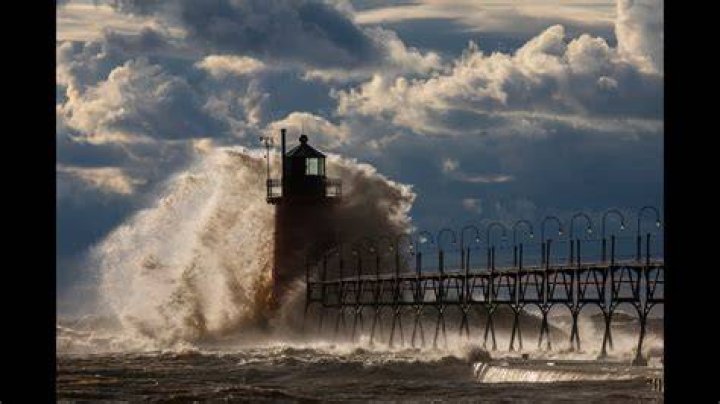
 Mia Kelly