How do I dispose of insulin?
 Ava Mcdaniel
 - Remove the drugs from their original containers and mix themwith something undesirable, such as used coffee grounds, dirt, orcat litter.
- Put the mixture in something you can close (a re-sealablezipper storage bag, empty can, or other container) to prevent thedrug from leaking or spilling out.
.
Simply so, how do you dispose of insulin needles?
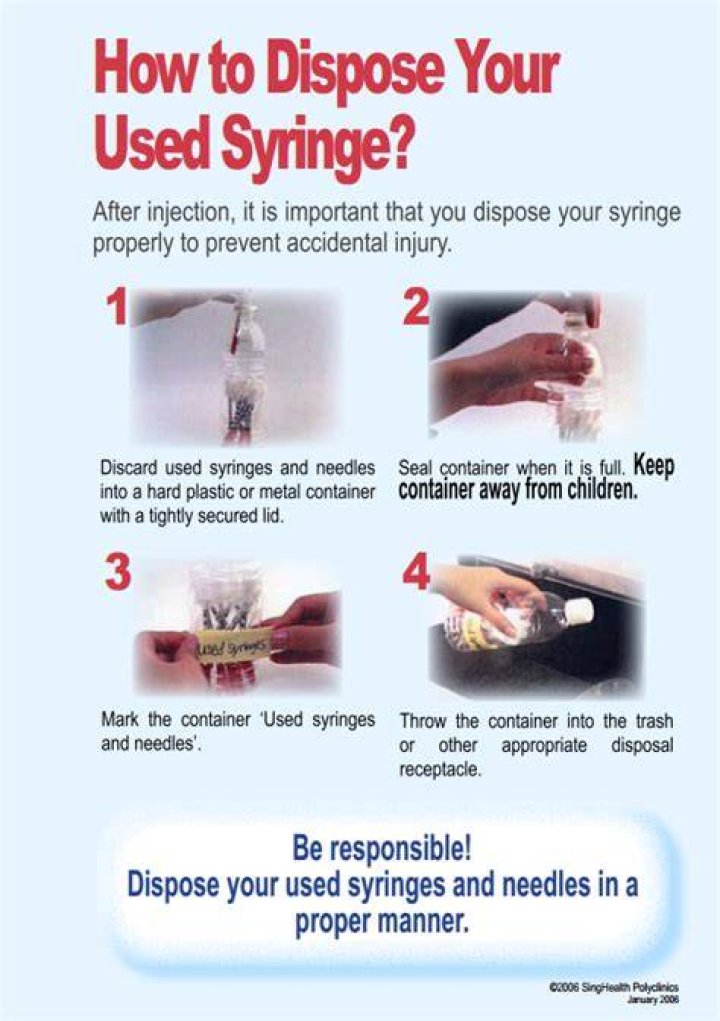
If you do not have needle-disposal programs in your area,instruct your patients to:
- Put needles into a container that has a lid and is strongenough to keep the needles from sticking through the sides, such asa liquid detergent bottle or metal can.
- Throw the container away before it is full all the way to thetop.
Furthermore, can I dispose of needles at Walgreens? More than a year after Walgreens began collectingunused medications in all of its stores, it has added a needledisposal system for customers' used needles. Sharpsrecently selected Walgreens to feature the NeedleCollection & Disposal System from Sharps Complianceexclusively in its stores.
People also ask, is insulin a hazardous waste?
Insulin vials which meet the criteria for beingdefined as empty are not classified as hazardous waste andmay be disposed of into the regular trash. Therefore,residual insulin in a vial would not be defined as a listedhazardous waste when disposed.
How do you dispose of diabetic needles?
The FDA recommends a two-step process for properlydisposing of used needles and other sharps.
- Step 1: Place all needles and other sharps in a sharps disposalcontainer immediately after they have been used.
- Step 2: Dispose of used sharps disposal containers according toyour community guidelines.
Related Question Answers
How are needles destroyed?
Once the needle or lancet is destroyed byheat in a destruction device, the remaining syringeand melted metal can be safely disposed of in the garbage (not therecycling container). A needle clipper that stores clippedneedles should be disposed of at a sharps collection site orthrough a mail-back program.Where should sharps containers be placed?
Sharps containers must be easily accessible toemployees and located as close as feasible to the immediatearea where sharps are used (e.g., patient care areas). Inareas, such as correctional facilities and psychiatric units, theremay be difficulty placing sharps containers in the immediateuse area.Does CVS dispose of old medications?
Walgreens, CVS and others encourage safedisposal of leftover prescriptions. Safely dispose ofyour unused or expired medications at pharmacy drop-offboxes. The company has collected 270 tons of medicationsince the start, he says.How do you dispose of needles in Texas?
Dispose of medical needles in apuncture-proof, non-clear dark plastic container. After carefullyplacing all needles in the container, seal the top with alid and tape closed. Place the container in a dark plastic trashbag, seal the bag closed and place in your trash bin for normalpick-up.Does Walgreens dispose of expired medications?
Simply bring your unwanted, unused or expiredmedication to a Walgreens safe medicationdisposal kiosk and drop it in—just like putting a letterin a mailbox.Do syringes go in sharps containers?
Loose needles, syringes and other medicalsharps should be collected in heavy-duty plasticcontainers. To dispose of used syringes andneedles safely: 1. Place used syringes andneedles into a FDA-approved sharps container or intoa heavy-duty plastic container, such as a laundry detergentor bleach bottle.What are the 7 categories of hazardous waste?
The four hazardous waste characteristics areignitability, corrosivity, reactivity, and toxicity.What medications are considered hazardous waste?
Some examples of P-listed drugs include:- Warfarin (Coumadin, Jantoven)
- Nicotine patches, lozenges or gum.
- Physostigmine, physostigmine salicylate.
- Arsenic trioxide (Trisenox)
- Cyclophosphamide.
What are the four main characteristics of hazardous waste?
When categorizing hazardous waste, the EPA breaks it downby four characteristics:- ignitability, or something flammable.
- corrosivity, or something that can rust or decompose.
- reactivity, or something explosive.
- toxicity, or something poisonous.