A 6-carbon glucose molecule is split into two 3-carbon molecules called pyruvates. Pyruvate is needed in order to create acetyl CoA. This is a very short step in between glycolysis and the citric acid cycle..
Furthermore, what happens to the carbons in the acetyl CoA molecules?
Acetyl CoA links glycolysis and pyruvate oxidation with the citric acid cycle. Acetyl CoA and the Citric Acid Cycle: For each molecule of acetyl CoA that enters the citric acid cycle, two carbon dioxide molecules are released, removing the carbons from the acetyl group.
Similarly, how many ATP is produced from acetyl CoA? Every acetyl-CoA yields 3 NADH + 1 FADH2 + 1 GTP (=ATP) during Krebs cycle. Considering an average production of 3 ATP/NADH and 2 ATP/FADH2 using the respiratory chain, you have 131 ATP molecules.
Just so, how many carbons does acetyl CoA have?
2 carbons
Can Acetyl CoA be converted to glucose?
Fatty acids and ketogenic amino acids cannot be used to synthesize glucose. The transition reaction is a one-way reaction, meaning that acetyl-CoA cannot be converted back to pyruvate. As a result, fatty acids can't be used to synthesize glucose, because beta-oxidation produces acetyl-CoA.
Related Question Answers
What is acetyl CoA used for?
Acetyl coenzyme A, or better known as acetyl-CoA, is an important molecule used in metabolic processes. It is primarily used by the body for energy production through the citric acid cycle, or Krebs cycle.What are the two main options for Acetyl CoA in the body?
Acetyl CoA has two main options-it may be used to synthesize fats or to generate the high-energy compound ATP. Acetyl CoA may be used as a building block for fatty acids, but it cannot be used to make glucose or amino acids.What happens to excess acetyl CoA?
When excess acetyl CoA is produced that cannot be processed through the Krebs cycle, the acetyl CoA is converted into triglycerides and fatty acids to be stored in the liver and adipose tissue. If diabetes is uncontrolled, the glucose in the blood is not being taken up and processed by the cells.What is the fate of acetyl CoA?
In normal condition, acetyl-CoA is mainly channeled into the Krebs cycle for energy production. In overnutrition state, acetyl-CoA can be used to store excess energy by forming fatty acids. Acetyl-CoA is also the source for cholesterol synthesis. In starved state, acetyl-CoA is converted into ketone bodies.What is the fate of CoA after it delivers an acetyl group into the citric acid cycle?
The citric acid cycle is also known as the Krebs cycle or the TCA (tricarboxylic acid) cycle. Acetyl CoA transfers its acetyl group to oxaloacetate to form citrate and begin the citric acid cycle. The release of carbon dioxide is coupled with the reduction of NAD+ to NADH in the citric acid cycle.Can acetyl CoA cross blood brain barrier?
However, fatty acids cannot be used by brain as fuel since, they cannot cross the blood brain barrier. Liver by producing ketone bodies helps brain cells during starvation. Acetyl CoA can't be circulated for two reasons: it's a high energy compound and it's labile. Also acetyl coA cannot cross cell membrane.Where is acetyl CoA produced?
It is produced in the second step of aerobic respiration after glycolysis and carries the carbon atoms of the acetyl group to the TCA cycle to be oxidized for energy production. It is produced by decarboxylation of pyruvate in the matrix of the mitochondria.Is acetyl CoA a fatty acid?
Fatty acid synthesis is the creation of fatty acids from acetyl-CoA and NADPH through the action of enzymes called fatty acid synthases. This process takes place in the cytoplasm of the cell. Most of the acetyl-CoA which is converted into fatty acids is derived from carbohydrates via the glycolytic pathway.How do you make acetyl CoA?
Acetyl-CoA is produced by the breakdown of both carbohydrates (by glycolysis) and lipids (by β-oxidation). It then enters the citric acid cycle in the mitochondrion by combining with oxaloacetate to form citrate.What is the function of CoA sh?
Coenzyme A (CoA, CoASH, or HSCoA) is a coenzyme, well known for it's role in the synthesis and oxidation of fatty acids, and the oxidation of pyruvate in the citric acid cycle.Can acetyl CoA make pyruvate?
Despite these findings, it is considered unlikely that the 2-carbon acetyl-CoA derived from the oxidation of fatty acids would produce a net yield of glucose via the citric acid cycle – however, acetyl-CoA can be converted into pyruvate and lactate through the ketogenic pathway.Why does acetyl CoA accumulate during starvation?
Acetyl - CoA must have enough intermediates in TCA cycle to enter the cycle and be broken down. During starving conditions, you have a lot less intermediates of the TCA cycle as cells direct their molecules to gluconeogenesis. So acetyl- CoA builds up.How is acetyl CoA produced from pyruvate?
Pyruvate is converted into Acetyl CoA in an intermediate process just before the Citric Acid Cycle. Here it reacts with Coenzyme A. Here it loses two of it's oxygens and one of it's carbons to form Carbon Dioxide. Also, one molecule of NAD+ is reduced to form NADH.Where does the energy stored in acetyl CoA end up?
When acetyl-CoA is oxidized to carbon dioxide in the Krebs cycle, chemical energy is released and captured in the form of NADH, FADH 2 , and ATP. The electron transport chain allows the release of the large amount of chemical energy stored in reduced NAD + (NADH) and reduced FAD (FADH 2 ).What is CoA enzyme?
Coenzyme A (CoA, SHCoA, CoASH) is a coenzyme, notable for its role in the synthesis and oxidation of fatty acids, and the oxidation of pyruvate in the citric acid cycle. In humans, CoA biosynthesis requires cysteine, pantothenate (vitamin B5), and adenosine triphosphate (ATP).How does acetyl CoA cross the mitochondrial membrane?
Acetyl-CoA is first made in the mitochondria either by the removal of hydrogen from a molecule pyruvate or by the oxidation of other fatty acids. Acetyl-CoA is moved through the mitochondrial membrane, and enters the cytoplasm of the cell, as the molecule citrate.What is the difference between acyl CoA and acetyl COA?
These are very important molecules in the metabolism of different biological compounds. The key difference between acetyl CoA and acyl CoA is that the acetyl CoA helps in protein, carbohydrate, and lipid metabolism whereas, the acyl CoA helps in the metabolism of fatty acids.Why do we use 36 ATP instead of 38?
Calculations giving 36-38 ATP per glucose are based on the assumption that oxidation of NADH produces 3 ATP and oxidation of UQH2 (FADH2, Succinate) produces 2 ATP. They translocate protons outward across the inner mitochondrial membrane, and the resulting proton gradient is used by the ATP synthase to produce ATP.How many ATP are produced from a 12 carbon fatty acid?
Assuming Lauric acid (12:0), then 78 ATPFirst, it costs 2 ATP to add CoA to the fatty acid, giving lauroyl-CoA. 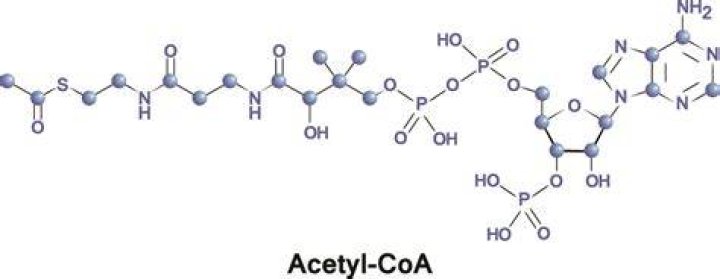
 Mia Horton