What causes keloid scars?
 Sarah Duran
 .
People also ask, why do people get keloids?
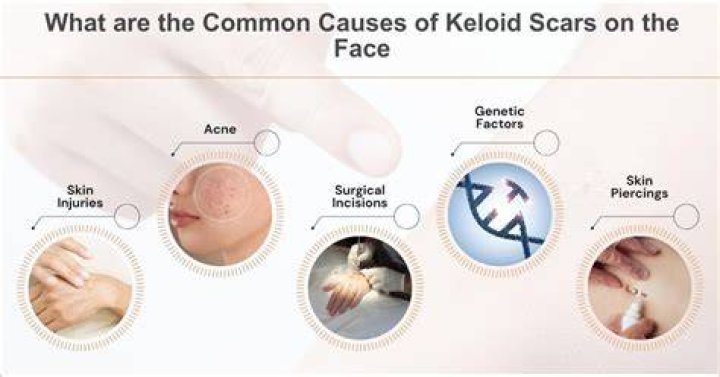
Keloids are raised overgrowths of scar tissue that occur at the site of a skin injury. They occur where trauma, surgery, blisters, vaccinations, acne or body piercing have injured the skin. Some people are prone to keloid formation and may develop them in several places. Keloids are more common in African-Americans.
One may also ask, how do you know if you're prone to keloids? The symptoms of a keloid can include:
- a localized area that is flesh-colored, pink, or red.
- a lumpy or ridged area of skin that's usually raised.
- an area that continues to grow larger with scar tissue over time.
- an itchy patch of skin.
how do you get rid of keloid scars?
Treatments include the following:
- Corticosteroid shots. The medicine in these shots helps shrink the scar.
- Freezing the scar. Called cryotherapy, this can be used to reduce the hardness and size of the keloid.
- Wearing silicone sheets or gel over the scar.
- Laser therapy.
- Surgical removal.
- Pressure treatment.
Do keloids go away?
Keloids can develop over weeks or months and typically do not go away on their own. One way to treat keloids is to remove them surgically, but because most people with keloids continue to be prone to abnormal scarring, a keloid may grow back in the same place after the surgery.
Related Question Answers
What's inside of a keloid?
A scar is made up of 'connective tissue', gristle-like fibers deposited in the skin by the fibroblasts to hold the wound closed. With keloids, the fibroblasts continue to multiply even after the wound is filled in. Thus keloids project above the surface of the skin and form large mounds of scar tissue.How do you flatten a keloid naturally?
Home remedies- Crush three to four aspirin tablets.
- Mix them with enough water to form a paste.
- Apply them to the keloid or wound site. Let it sit for an hour or two, then rinse.
- Repeat once every day until desired results are achieved.
Does tea tree oil help keloids?
There's no evidence to support using tea tree oil on existing scars, whether they're acne scars, keloids, or hypertrophic scars. In addition, tea tree oil has anti-inflammatory properties that may help to reduce redness and swelling around wounds.Are keloids dangerous?
Although keloids are not harmful to your health, they may present cosmetic concerns. Keloids occur from the overgrowth of scar tissue; symptoms will occur at a site of previous skin injury. They can also develop following the minor injuries that occur with body piercing.Can you pop a keloid?
With the help of a medical professional, you can have it safely removed. Remember: This is not a pimple, so please don't pop it like one. Since it's not actually acne, there's nothing to squeeze out of the bump. In fact, doing so could potentially cause an infection, which is much worse than some overgrown scar tissue.What is a keloid scar picture?
Picture of KeloidKeloid: A scar that rises quite abruptly above the rest of the skin. It is irregularly shaped, usually pink to red in color, tends to enlarge progressively, and may be harder than the surrounding skin. Keloids are a response to trauma, such as a cut to the skin.Why do keloids itch?
The excessive stretching of the skin can cause itching, and because of their larger size, keloids are prone to rubbing on clothing, causing irritation. Like any scar, keloids can be tricky to treat. But, medical advances are being made in keloid treatment that may hold promise.Who is at risk for keloids?
Patients at high risk of keloids are usually younger than 30 years and have darker skin. Sternal skin, shoulders and upper arms, earlobes, and cheeks are most susceptible to developing keloids and hypertrophic scars. High-risk trauma includes burns, ear piercing, and any factor that prolongs wound healing.How much does it cost to remove a keloid scar?
The cost of treatment varies greatly. Over-the-counter silicone products typically start at $19.99, but surgery can cost more than $800. “Cost depends on the size, location and treatment,” Judge says. Taylor agrees that it's a case-by-case basis, but charges about $85 to $100 per injection at her clinic.Can you permanently remove a keloid?
One way to treat keloids is to remove them surgically, but because most people with keloids continue to be prone to abnormal scarring, a keloid may grow back in the same place after the surgery. Surgical removal is often more effective if combined with a nonsurgical treatment.Does silicone gel work on keloids?
Silicone sheets and gelApplying silicone sheets or gel to the skin may help to improve the appearance of a scar. Another study found that a silicone gel was as effective as silicone sheeting in diminishing hypertrophic and keloid scars.Is keloid genetic?
BACKGROUND: Keloids are proliferative fibrous growths that result from an excessive tissue response to skin trauma. Most keloids occur sporadically, but some cases are familial. However, the genetics of keloid formation have only rarely been documented, and the mode of inheritance is not known.How do you prevent a keloid scar?
How can you prevent keloids?- Cover a new wound with a thin layer of petroleum jelly, such as Vaseline, and a nonstick bandage. Hold the bandage in place with tape so that there is even pressure on the wound.
- After a wound is healed over, use a silicone gel bandage.
- After ear piercing, use pressure earrings.